The Unique Elegance of Floral Liner Art Design: Applications and Considerations
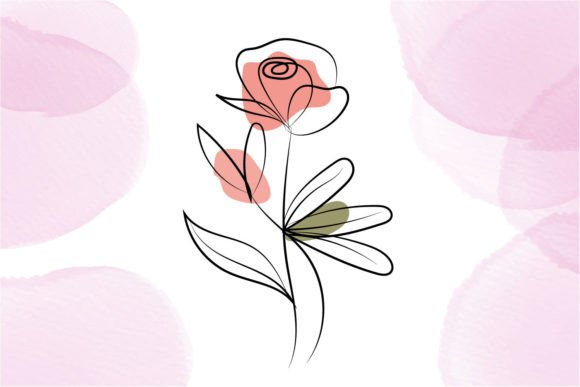
In the realm of visual art and design, certain styles stand out for their simplicity and versatility. Floral Liner Art Design is one such approach, characterized by its clean, continuous line illustrations of botanical elements. Unlike more detailed or shaded floral artwork, this style relies solely on a single, unbroken line or a series of connected lines to create the entire composition. This creates a minimalist yet sophisticated aesthetic that is both modern and timeless. The absence of fill, shading, or texture places the emphasis entirely on form and flow, making the design inherently elegant and adaptable.
What makes Floral Liner Art Design distinct is its foundational principle of continuity. The artist or designer crafts a complete floral scene—be it a rose, a wreath, or a sprawling vine—without lifting the virtual or actual pen. This demands a thoughtful understanding of botanical anatomy and composition to ensure the final illustration is coherent and recognizable. The result is artwork that feels fluid, organic, and often meditative. Compared to traditional floral illustrations, which might use cross-hatching, color washes, or intricate detail, line art is stripped to its essence. This purity of form is its primary strength, but also defines its specific applications.
Understanding the Vector Advantage: Formats and Flexibility
A key feature of professional Floral Liner Art Design collections is their creation as full vector artwork. Vector graphics, unlike raster images like standard JPGs, are defined by mathematical points and paths. This technical foundation is what enables the "editable, resizable" promise. You can scale a vector floral line design from a postage stamp to a billboard without any loss of quality or the introduction of pixelation. This is a significant advantage over raster-based floral artwork, which can become blurry or degrade when enlarged.
Such collections typically include EPS and high-resolution JPG formats. The EPS file is the editable vector source, intended for use in programs like Adobe Illustrator. The JPG provides a ready-to-use, high-resolution raster version for simpler applications. The ability to change colors directly within the vector file is another notable benefit. A single black line drawing can be instantly recolored to navy blue, pastel pink, or a metallic gold without needing to repaint or rework the artwork. This flexibility is crucial for designers working across branded projects where color schemes must be consistent.
The recommendation to use Adobe Illustrator for the best results is practical. While other software can open EPS files, Illustrator is the native environment for vector editing and offers the most precise control over line weights, colors, and adjustments. For those without access to professional design software, the high-resolution JPGs still provide substantial utility, though the core advantages of scalability and color editing are diminished.
Comparing Art Styles: When Line Art is the Right Fit
Floral Liner Art Design exists within a broader spectrum of botanical art styles. Understanding its position helps in selecting the right resource for a project. For instance, compared to detailed botanical prints or watercolor floral art, line art offers a cleaner, more graphic feel. It integrates more seamlessly into modern, minimalist, or corporate contexts where busier artwork might clash. Conversely, for a project requiring a sense of lush realism or traditional romance, a more detailed illustration might be a better alternative.
Its strengths are most apparent in applications where clarity, scalability, and adaptability are paramount. For logos, the simplicity and scalability of vector floral line art are ideal. A logo must work at tiny sizes on a business card and large sizes on a sign. For textile design, such as T-shirts, the clean lines often translate well to printing processes, especially screen printing or vinyl cutting, where solid lines and limited colors are preferable. In book interiors, especially for chapter headings or subtle decoration, line art provides elegance without visual weight that could distract from text.
However, there are tradeoffs. The minimalist nature of Floral Liner Art Design may not convey the emotional depth or vibrancy that a colored, textured painting can. It is less about evoking a specific atmosphere and more about providing a refined structural element. Therefore, if the project's goal is to elicit a strong, specific emotional response—like the warmth of a countryside garden—other styles may be more effective.
Practical Applications: From Prints to Product Design
The listed applications—prints, tattoos, posters, wall art, textile, cards, book interiors, T-shirts, logos—highlight the extraordinary versatility of a well-executed Floral Liner Art Design collection. Each use case leverages different attributes of the style.
For wall art and posters, the high-resolution files ensure print quality is sharp. The minimalist aesthetic can create a calming, uncluttered feel in a room, contrasting effectively with more complex decor. For tattoos, the continuous line style translates naturally to body art, where clean, flowing lines are often desirable for enduring, elegant tattoos. Artists can use the vector paths as a direct reference for their stencils.
In product design, such as on cards or textile, the editable nature allows designers to match brand colors exactly. A wedding invitation suite might use the same line art wreath design on the invitation, envelope liner, and website, with colors changed to suit each material. This consistency is a logistical advantage. When considering alternative resources, such as purchasing individual stock illustrations for each project, a cohesive collection of floral line art can offer cost and time efficiency, provided the style fits the ongoing design needs.
Decision Factors: Evaluating Your Needs
Choosing to utilize a Floral Liner Art Design collection depends on several factors. First, consider the required flexibility. If your projects demand frequent resizing (for both large and small formats) or recurrent color changes, the vector format is a compelling reason to choose this option. Second, assess the visual tone of your project. Does the minimalist, graphic elegance align with your message or brand? If your audience expects ornate detail, it may not.
Third, evaluate your technical capacity. To fully exploit the features, access to vector editing software like Adobe Illustrator is beneficial. If you only have basic image editors, you will primarily rely on the pre-made JPGs, which still offer high quality but limit customization. Fourth, think about scope of use. Are you looking for a single image for a one-off poster, or a versatile asset library for multiple projects across different mediums? The latter scenario is where such a collection often provides the most value.
It is also worth considering that while Floral Liner Art Design is highly adaptable, it is not inherently unique. Many designers and artists offer line art. The distinction often lies in the quality of the drawing—the fluency of the line, the balance of the composition—and the breadth of the collection. Reviewing the specific designs for their artistic merit, not just their technical specifications, is a crucial step.
When Alternatives Might Be Necessary
Floral Liner Art Design is an excellent resource for many scenarios, but it is not a universal solution. You might need another option if your project requires photorealistic detail, complex color gradients, or a highly specific, non-botanical artistic style. For example, a project centered on a vintage, pressed-flower aesthetic might better suit a collage-style illustration with texture and depth.
Similarly, if your application is purely for digital use on websites or apps at fixed sizes, and you have no need for physical printing or resizing, simpler raster graphics might suffice. The investment in vector assets is most justified when scalability is a future concern. Also, if the intended use is for a background element that needs to be very subtle or textured, the stark, clear lines of floral liner art might be too dominant, and a watercolor or patterned alternative could blend more effectively.
Ultimately, the choice hinges on aligning the artwork's characteristics—its minimalist, scalable, editable vector nature—with the practical demands and aesthetic goals of your project. By understanding both the capabilities of Floral Liner Art Design and the landscape of available artistic styles, you can make a more informed and effective selection for your creative or commercial needs.