The Art and Utility of Floral Repeating Patterns in Modern Design
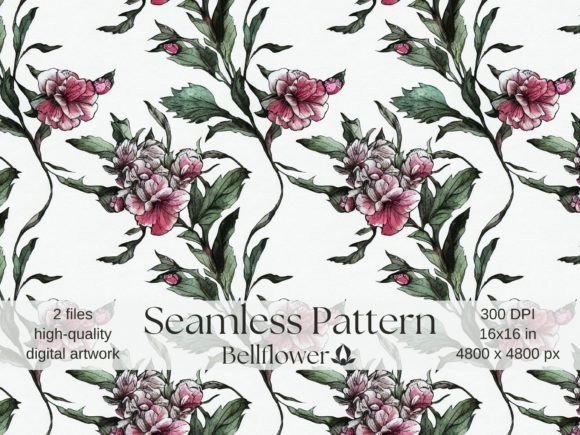
The visual language of flowers has been a cornerstone of decorative arts for centuries. When these natural motifs are translated into a systematic Floral Repeating Pattern, they transcend mere decoration to become a versatile and powerful design tool. This seamless flower pattern, structured to tile infinitely without visible breaks, forms a foundational background that can adapt to a multitude of surfaces and mediums.
Characteristics of a High-Quality Seamless Floral Pattern
A truly effective repeating flower background is defined by several technical and aesthetic qualities. The repeat itself must be seamless, meaning the edges of the design unit align perfectly with its opposite sides, creating a continuous, uninterrupted field of imagery. This requires careful planning in the layout of stems, leaves, and blossoms to ensure they flow across the repeat boundary. The pattern tile, often called a swatch, is the building block.
For professional applications, the specifications of the digital file are crucial. A pattern with a repeat size of 4800 by 4800 pixels at 300 DPI offers substantial resolution. This translates to a 16 by 16 inch physical repeat at high quality, providing immense flexibility. The 300 DPI resolution ensures that the pattern retains crisp detail when printed, a vital consideration for physical products. While the JPEG file type is universally accessible and flattened for ease of use, it’s important to understand that this means the design is a single image layer, ready for immediate application but not editable as separate elements.
From Digital File to Physical Product: The Workflow
Acquiring a digital seamless pattern is the first step in a creative workflow. Handling the image files involves downloading and typically extracting them from a compressed .zip archive. Once accessible, the JPEG can be imported into various software. Designers and creators then apply this repeating flower background to their chosen canvas within graphic programs, where the tiling function replicates the pattern across the entire artboard or document.
This process is the bridge between the digital asset and its real-world manifestation. The same floral repeating pattern file can be set as the fill for a digital illustration, uploaded to a print-on-demand service for fabric, or sent to a commercial printer for large-scale wrapping paper production. The workflow’s efficiency hinges on the pattern’s seamless nature and high resolution, which prevent tedious manual alignment and guard against pixelation.
The Broad Spectrum of Applications and Use Cases
The real-world relevance of a seamless floral pattern is demonstrated by its astonishing range of applications. Its utility spans industries and hobbies, serving both functional and aesthetic purposes.
In the realm of paper and stationery, this pattern becomes the elegant background for greeting cards, notebook covers, letterhead, and gift tags. The repeating design provides a cohesive and professional look for branded materials.
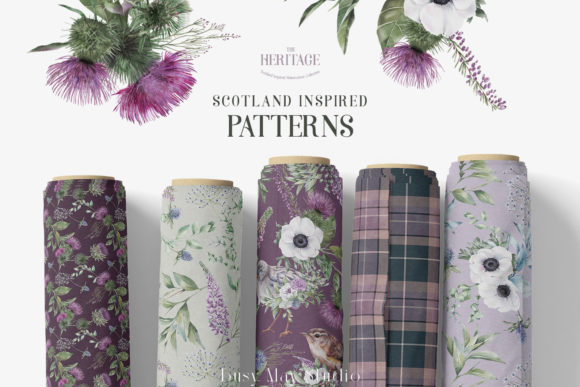
For fabric and textile design, the pattern is a cornerstone. Applied to cotton, linen, or silk, it can create beautiful fabrics for apparel, home décor curtains, upholstery, or quilt squares. The scale of the repeat, in this case 16 inches, is particularly important for fabric, as it determines the rhythm and spacing of the motifs across a garment or drape.
Wrapping paper is another natural fit. A seamless flower pattern allows for endless, beautiful wrapping without awkward gaps or misaligned imagery, turning a simple gift into a statement.
The field of decoration extends even further. Interior designers might use the pattern to create custom wallpapers or accent wall decals. Event planners could employ it for themed backdrops, table runners, or party invitations. Hobbyists find use in craft projects like decoupage, scrapbooking, or homemade candle wrapping.
Beyond these, the pattern serves as a key visual element in web design backgrounds, blog graphics, marketing brochures, and book covers. Its adaptability is its greatest strength, allowing a single asset to fuel creativity across disparate fields.
Practical Considerations for Users
While the advantages are clear, working with floral repeating patterns involves some important practical considerations. First, as noted, mock-up images are often not included with the pattern file itself. The creator must visualize or generate their own mock-up to see how the pattern will look on a final product.
A critical point is color management. Due to fundamental differences between light-emitting monitors and ink-based printers, colors can appear different in print than on screen. A vibrant floral pattern on a computer display may render with slightly different saturation or hue when printed on paper or fabric. Professionals often account for this by checking color profiles and, when possible, requesting physical proofs before large-scale production.
The technical requirement of having knowledge to download files, open .zip archives, and handle image files is essential. This basic digital literacy ensures the user can successfully access and deploy the asset. For those applying the pattern, understanding how to manipulate image scale and maintain resolution within their design software is also key to preserving the pattern’s quality.
Advantages of a Ready-to-Use Floral Pattern Asset
Utilizing a pre-designed, high-resolution floral repeating pattern offers distinct advantages over creating one from scratch. It saves significant time and resources, bypassing the complex process of designing a seamless tile and rendering it at professional specifications. For small business owners or hobbyists without advanced graphic design skills, it provides an instant, professional-grade design element.
The pattern’s flattened, non-vector JPEG format simplifies use. It is compatible with virtually any software, from advanced professional suites to simpler, consumer-level programs, lowering the technical barrier to entry. This democratizes access to high-quality design, enabling educators creating classroom materials, researchers designing presentation graphics, or entrepreneurs branding their products to achieve a polished look without a massive investment.
Furthermore, a well-composed floral pattern carries inherent aesthetic benefits. It can evoke specific moods—romantic, rustic, modern, or tropical—based on the flower selection and style. This emotional resonance can be strategically aligned with a project’s goal, whether it’s to convey luxury on stationery or freshness on summer fabric.
Observations on Trends and Implementation
In contemporary design, the use of repeating patterns, especially floral ones, reflects a blend of nostalgia and modern digital efficiency. There is a noticeable trend towards patterns that feel organic and hand-drawn yet are perfectly engineered to tile seamlessly—a marriage of artisan sensibility and technical precision.
Implementation often begins with selecting the right pattern for the intended medium. A dense, intricate floral repeating pattern might be ideal for a small-scale stationery item where detail is visible, while a larger, simpler repeat could be better for bold fabric applications. The scale of the 4800px tile allows for substantial cropping or focusing on a detail of the pattern if a smaller repeat is needed for a specific project.
Successful implementation also considers context. The same seamless flower background might be used at full opacity for a vibrant wrapping paper, or overlayered at reduced opacity as a subtle texture behind text on a website. This flexibility underscores the pattern’s role as a foundational layer in a design hierarchy, interacting dynamically with other elements placed over it.
Ultimately, the value of a floral repeating pattern lies in its dual nature as both art and tool. It is a carefully crafted composition celebrating botanical beauty, and simultaneously a reproducible, scalable asset engineered for practical creation. From the professional graphic designer to the hobbyist crafting at home, this seamless design element provides a reliable and beautiful starting point, inviting users to build upon its endless field of flowers to bring their own visions to life.